
Author
J. R. Úrbez-Torres and D. T. O’Gorman
Initiation date
Synopsis

In the early 2000s, vineyard growers noticed significant grapevine decline, initially thought to be from cold winter temperatures. Grapevines were growing and producing less, and parts of the vine would die. In 2010, researchers from Agriculture and Agri-Food Canada (AAFC) set out to identify the cause and potential solutions.

After a 3-year research project, AAFC researchers determined the primary cause of the decline was grapevine trunk diseases – a group of diseases each caused by a different fungal species. The fungi infect grapevines through pruning wounds. Their spores land on the wounds and, in favourable environmental conditions, begin to grow. The fungi grow in plant tissues that transport water and nutrients (xylem and phloem), resulting in the development of cankers and/or wood rot. The cankers interrupt the flow of water and nutrients, resulting in the death of spurs, cordons, and/or trunk, and eventually leading to the death of the vine.

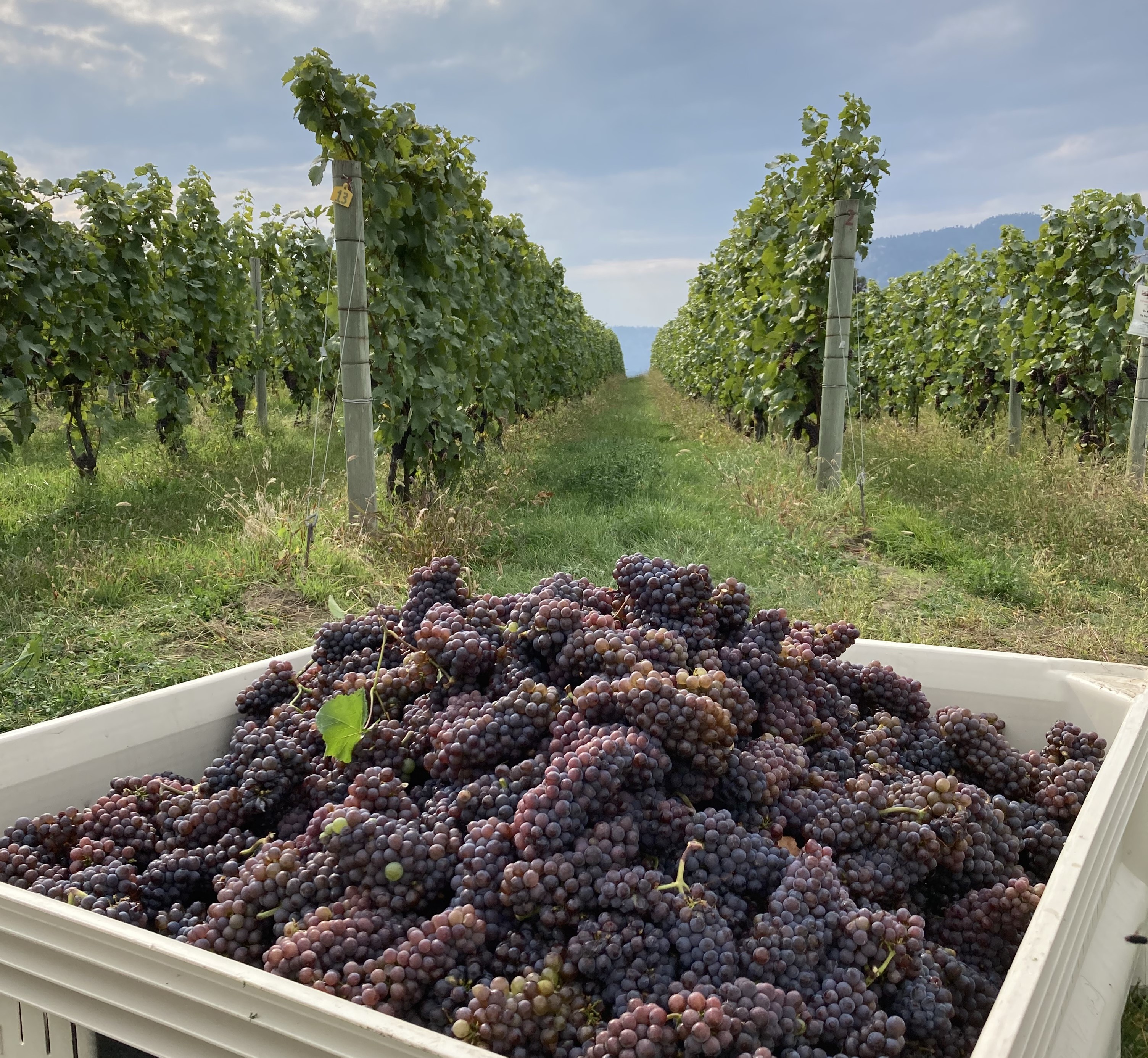
Harvested red grapes. Photos by J. R. Úrbez-Torres, AAFC.

Worldwide, over 100 different fungal species have been associated with these trunk diseases. All known grapevine trunk diseases have been found in BC, including ones affecting young vineyards (within ~5 years after planting) (Petri disease and black foot) and those affecting mature vineyards (Esca, Eutypa dieback, Botryosphaeria dieback, and Phomopsis dieback). In total, over 40 different fungi associated with these diseases have been identified in BC. The most common trunk disease in BC is Botryosphaeria dieback. AAFC researchers developed new molecular diagnostic techniques that identify which fungi are present and how widespread they are in plants and in soil, water, and air.

Download the research brief here (prepared by Nisa Chavez and Juliana Cao from the BC Food Web team, with the help of Jose Úrbez-Torres)

Project Updates

GTD_Revised_BCFW CCLSP (2025-2026)
Download

Related Videos, Findings & Events

No results found.

Newsletter Signup

Stay informed about the latest trends and updates in the British Columbia wine industry.

"*" indicates required fields

This field is for validation purposes and should be left unchanged.
Name*